



For many of us, August is the last full month of summer. It's the time when we begin to notice the days growing shorter, while occasional hints of autumn briefly interrupt the summer heat. For stargazers, earlier sunsets mean more evening time to enjoy the season's signature celestial sights.
I always look forward to August as a chance to escape the city and take in the spectacle of the Milky Way. By the middle of the month, the galaxy's center is riding above the southern horizon by 10 p.m. We can't actually see the center itself, located some 30,000 light-years away, but the Milky Way's bright central bulge is easy to spot.
What appears as a diffuse glow to the unaided eye begins to resolve into vast star clouds through a pair of binoculars. A small telescope reveals even more, bringing star clusters and softly glowing nebulae into view.
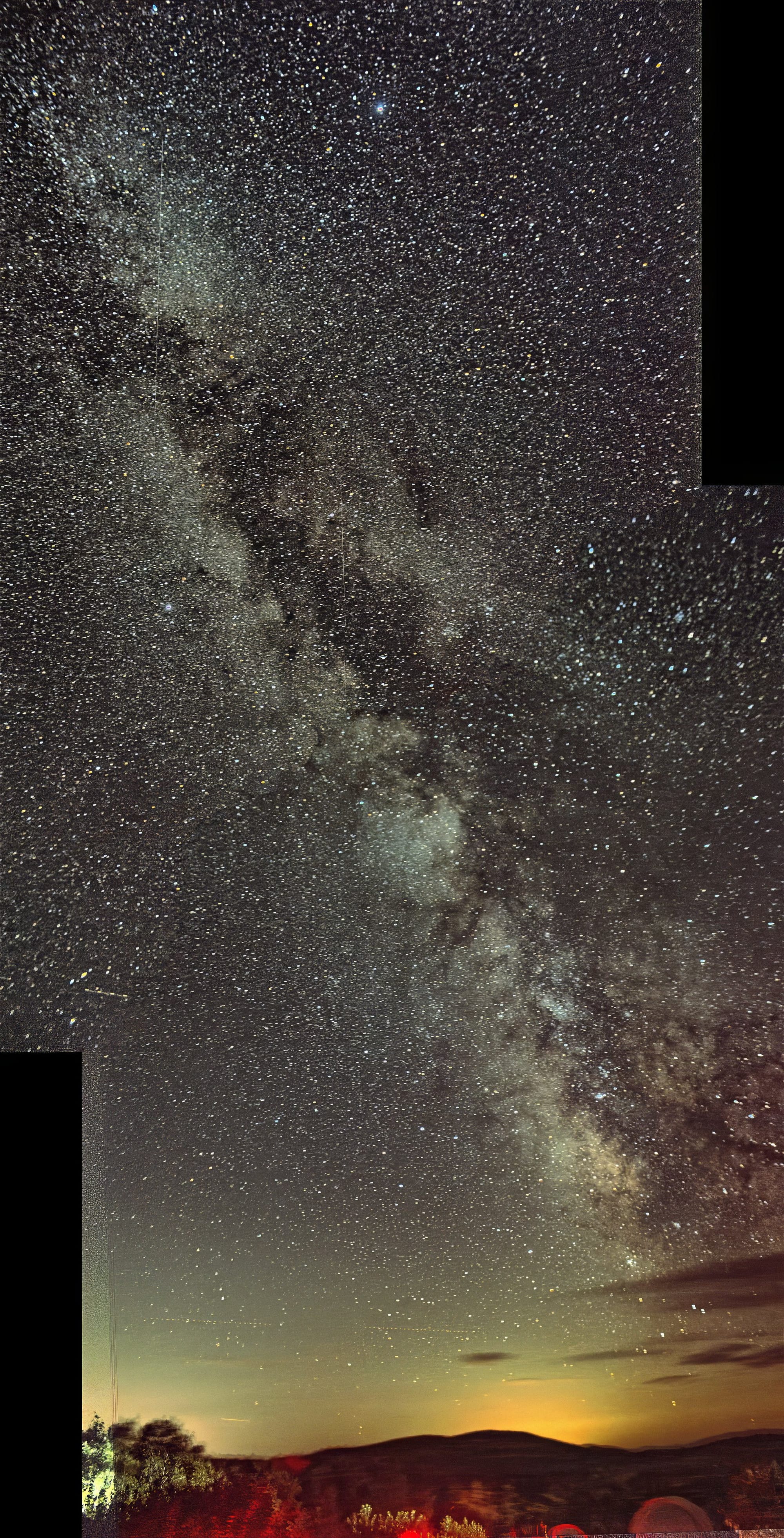
You'll also notice stretches along the Milky Way where relatively few stars are visible. These dark "rifts" are immense clouds of interstellar gas and dust that block the light from more distant stars. Many cultures, particularly in Mesoamerica, incorporated these dark lanes into their sky lore.
The season's signature star grouping is the Summer Triangle, formed by the bright stars Vega, Altair and Deneb. Vega is the brightest and westernmost of the trio. Altair marks the triangle's southern point, while Deneb anchors its northern tip.
Each star belongs to a different constellation. Vega is part of Lyra, the Harp, a small parallelogram-shaped constellation pointing roughly south. Altair belongs to Aquila, the Eagle, whose stars are somewhat harder to trace. Deneb marks the tail of Cygnus, the Swan, one of the easiest constellations to recognize, even from suburban skies.
Here are some things to look for this month:
Aug. 1: This day is Lammas, one of the four “cross quarter” days observed widely in Medieval Europe. It marks the halfway point between the Summer Solstice and the Autumnal Equinox.
Aug. 12: The New Moon will bring a total solar eclipse to parts of Greenland, Iceland and northern Spain. Here in DC, we'll see only a small partial eclipse, with about 10 percent of the Sun's disk obscured by the Moon.
Aug. 12-13: The Perseids meteor shower peaks overnight. This should be an excellent year to watch because there will be no interference from moonlight. Find a dark location to enjoy what is typically the year's best meteor display.
Aug. 27-28: We'll have a ringside seat for a very deep partial eclipse of the Full Sturgeon Moon. At mid-eclipse (12:14 a.m. Eastern on the 28th), about 93 percent of the Moon's disk will be covered by Earth's shadow.
We'll have more details on these events as they draw closer.


