



Thursday was the second day at or above 100 this year in DC, last occurring June 12. A big difference between then and now is that the humidity has increased a good deal.
Dew points — a measure of moisture in the air — spent most of Thursday above 70 degrees, though readings there dropped a bit on drier winds more out of the west this afternoon, which is somewhat common of our hottest days. Thursday evening, when the heat index was 100 at 10 p.m., the dew point rose to 78.
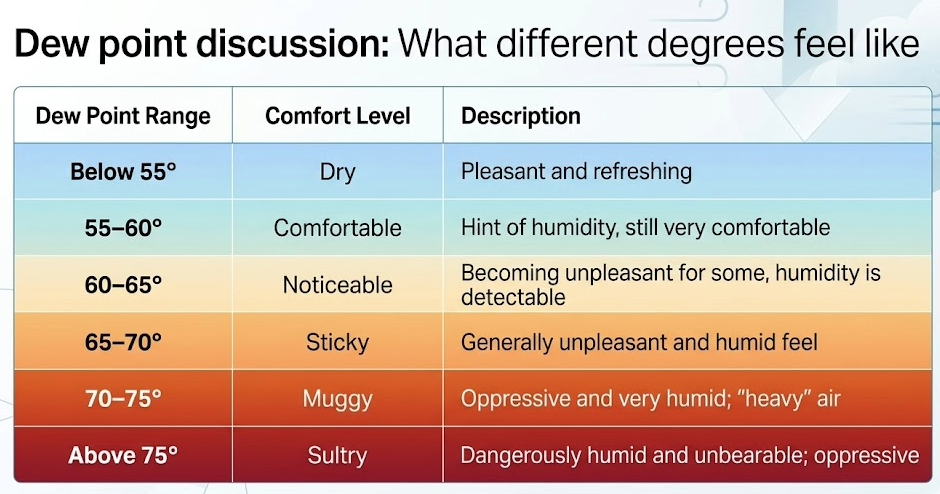
70 or above is considered muggy. 75 or above is oppressive and potentially dangerous. The additional moisture in the air makes it feel as much as 10 or so degrees hotter than it is. It also makes it harder for your body to cool itself because sweat evaporates more slowly in humid air.
While 78 for a dew point sounds extreme – and it is way up there – it's right about where DC's maximum dew point each year ends up. Both of the last two years before this one had a dew point maximum of 78.
Dew points in this episode have climbed to at least the mid-70s in much of the area, DC's official observation location at Reagan National Airport increases the odds of ultra-high humidity. That's because it sits right on the bank of the Potomac River and water temperatures there get as high as the 80s to near 90 or even hotter during most summers.
When water temperatures are that high their ability to deliver moisture to the air increases significantly. The added moisture also keeps temperatures from dropping much at night.
Humidity levels were extreme from New York to D.C. on Thursday morning — on par with Miami, New Orleans and Houston.
— Ben Noll (@BenNollWeather) July 2, 2026
Around 104 million Americans will face oppressive 75-degree dew points (extreme humidity) through Friday. pic.twitter.com/K55EZWiX1u
On super rare occasions, the dew point in DC has reached and surpassed 80. As recently as 2012 it reached 83 at night during a heat wave. Such levels are more common along the Gulf Coast or other similar bodies of water like the Arabian Sea.


