




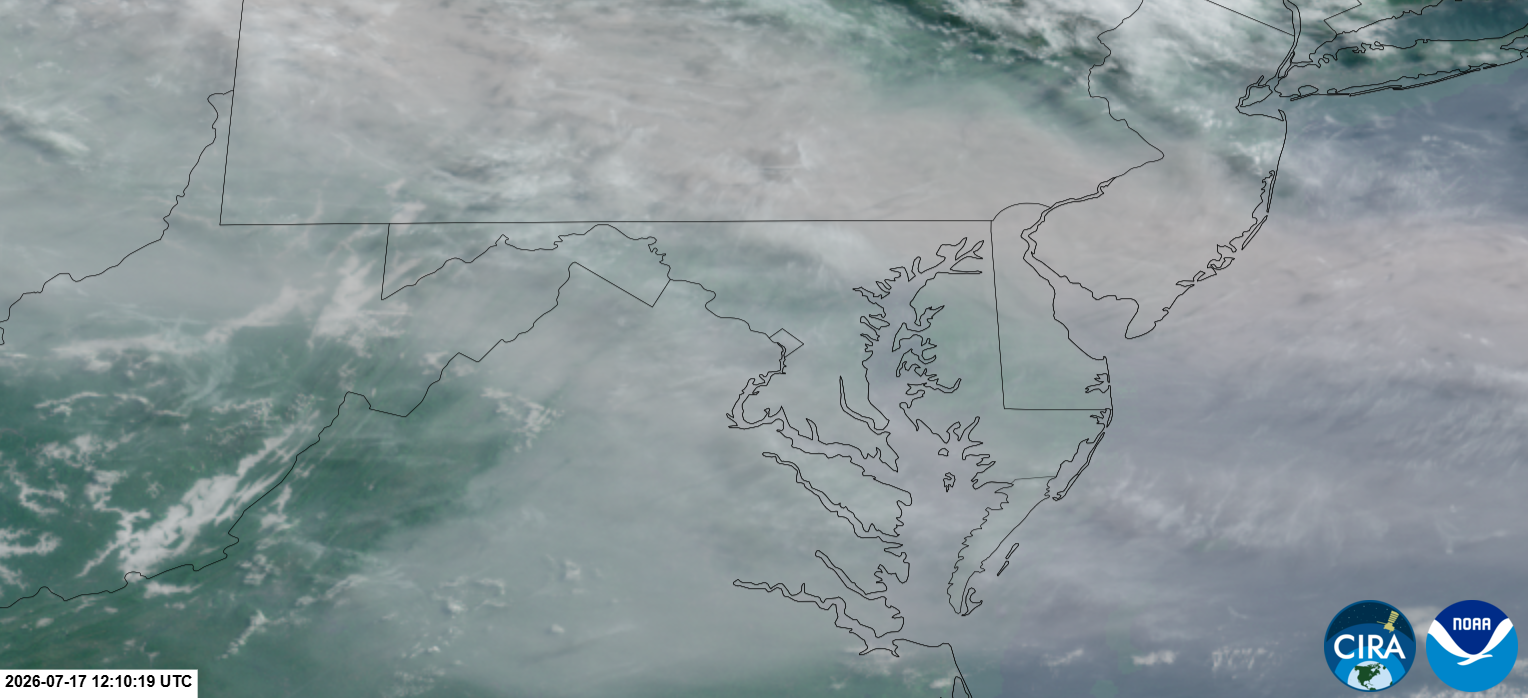
As a cold front pushed a dense plume of wildfire smoke from Canada southward, the DC area awoke Friday to widespread very unhealthy (code purple) to hazardous (code maroon) air quality. An acrid, woody/rubbery smoke smell hits as soon as you step outside.
"My eyes are burning," said a Capital Weather commenter in transit to work.
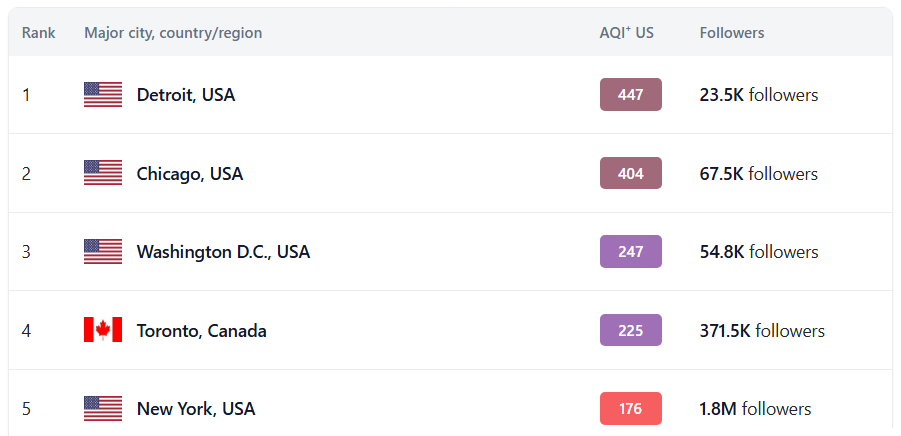
According to monitoring site IQAir, DC had the third-worst air quality of major cities across the world around sunrise, behind Detroit and Chicago. The top five also included Toronto and New York City.
In a morning update, the Metropolitan Washington Council of Governments issued a code purple alert, upgraded from code red, warning that "everyone should reduce their exposure to wildfire smoke."
Additional comments on social media remarked the smoke resembles a fog, is causing scratchy throats and burning eyes, and is inducing headaches.
A massive area of very unhealthy to hazardous air stretches from the Upper Midwest, across the Great Lakes region, and into the Mid-Atlantic and Northeast.
If anything, the poor air might get worse before it gets better. Weather models suggest the DC area is locked in with smoke for the day, and light wind flow may allow it to pool up a bit east of the Appalachians.
PM2.5 air quality values as high as 373 AQI were observed in Ashburn, Virginia, Friday morning. Compare that to a max in DC of 273 AQI during the historic June 2023 wildfire smoke outbreak.
Code red (unhealthy) begins at AQI 151, with code purple (very unhealthy) at 201 and the worst category, maroon (hazardous), at 301.
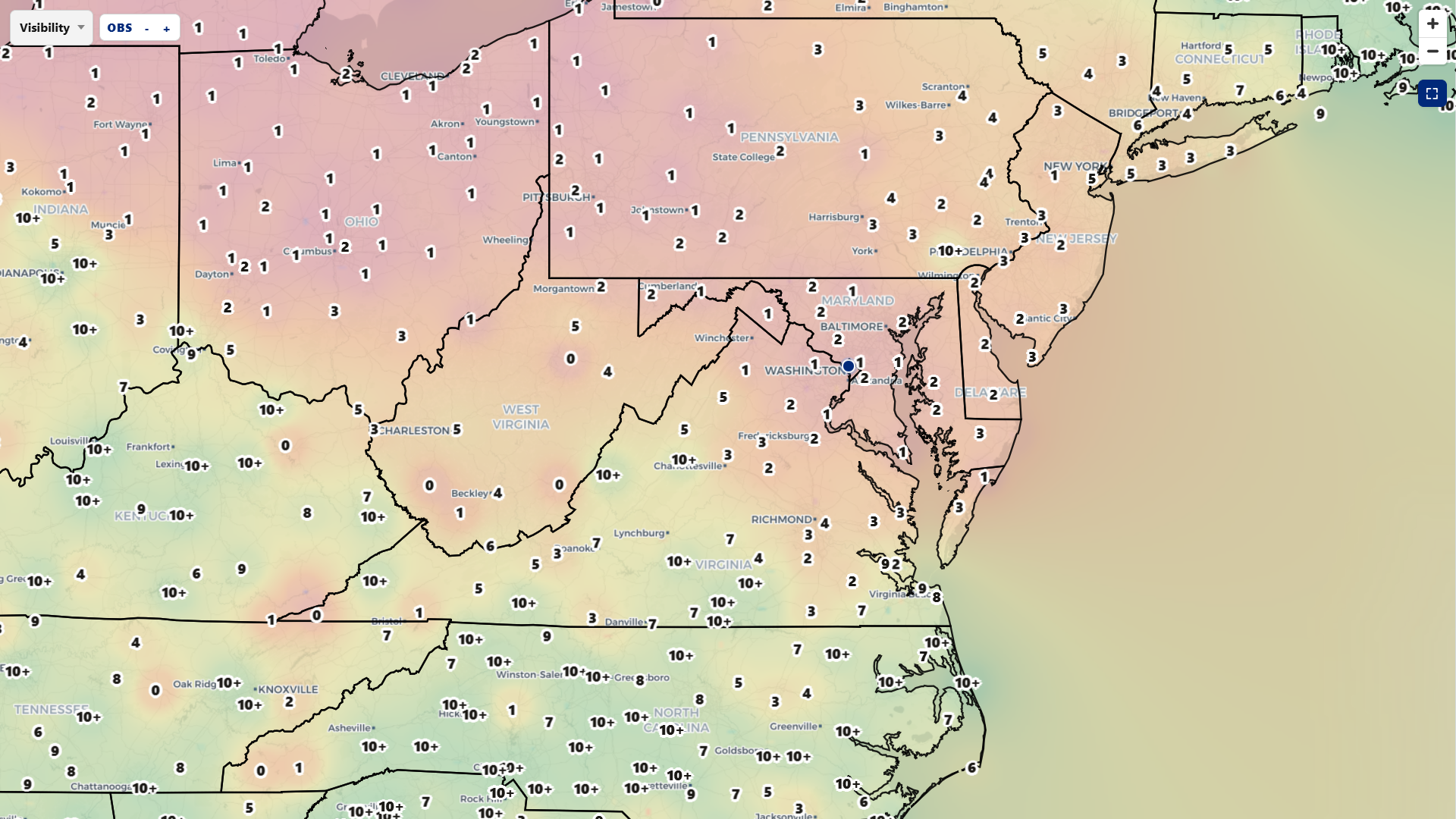
The observation map on our Weather Now page really shows off the smoke footprint across the broader region. It's necessary to travel well south for cleaner air.
Thick smoke moved into DC Thursday night around 11 p.m. when visibility dropped from 10 miles to 6 miles. At 7 a.m. Friday morning, visibility was down to 1.25 miles.
The primary traveling pollutant from wildfires is PM2.5, or tiny particulates about 1/30th the size of a human hair.
The fine particles in wildfire smoke can travel deep into the lungs and even enter the bloodstream. According to the EPA, exposure can trigger asthma attacks and increase the risk of heart attacks, strokes and premature death. Young children, older adults, and people with heart or lung disease are especially vulnerable.
Limit time outdoors or consider wearing an N95 mask if you must be outside. Indoors, keep windows closed and run your air conditioning with a MERV-13 or higher-rated filter, if possible.
You can monitor air quality levels on our health page.
@capitalweather The wildfire smoke smell is very strong and visibility is being limited. Photo taken in Glen Burnie, MD. pic.twitter.com/jO9Z89RUHo
— TIMOTHY BUTZ (@timbutz70) July 17, 2026
While remaining inside in air-conditioned environment is helpful, about half the outdoor smoke particulates can still penetrate typical indoor spaces. Tighter-built homes will have much less outdoor air inside while drafty houses or those with open windows will more closely represent outdoor conditions, according to Maryland's Department of Environment.
Here are some of the additional impacts we might expect from the smoke:
- Smoky odor: The air may smell like a campfire.
- Reduced visibility: Hazy skies could limit how far you can see.
- Slightly cooler temperatures: Thick smoke can block some sunlight, trimming afternoon highs by a couple of degrees.
- More vivid sunrises and sunsets: Smoke particles scatter sunlight, often producing especially vibrant oranges and reds.
This smoke could linger through Friday night before being scoured out at least partially as south winds increase ahead of a cold front on Saturday. The air quality forecast for Saturday is code yellow, a three category improvement, meaning more moderate levels of smoke pollution.
This report will be updated as the day progresses.


