



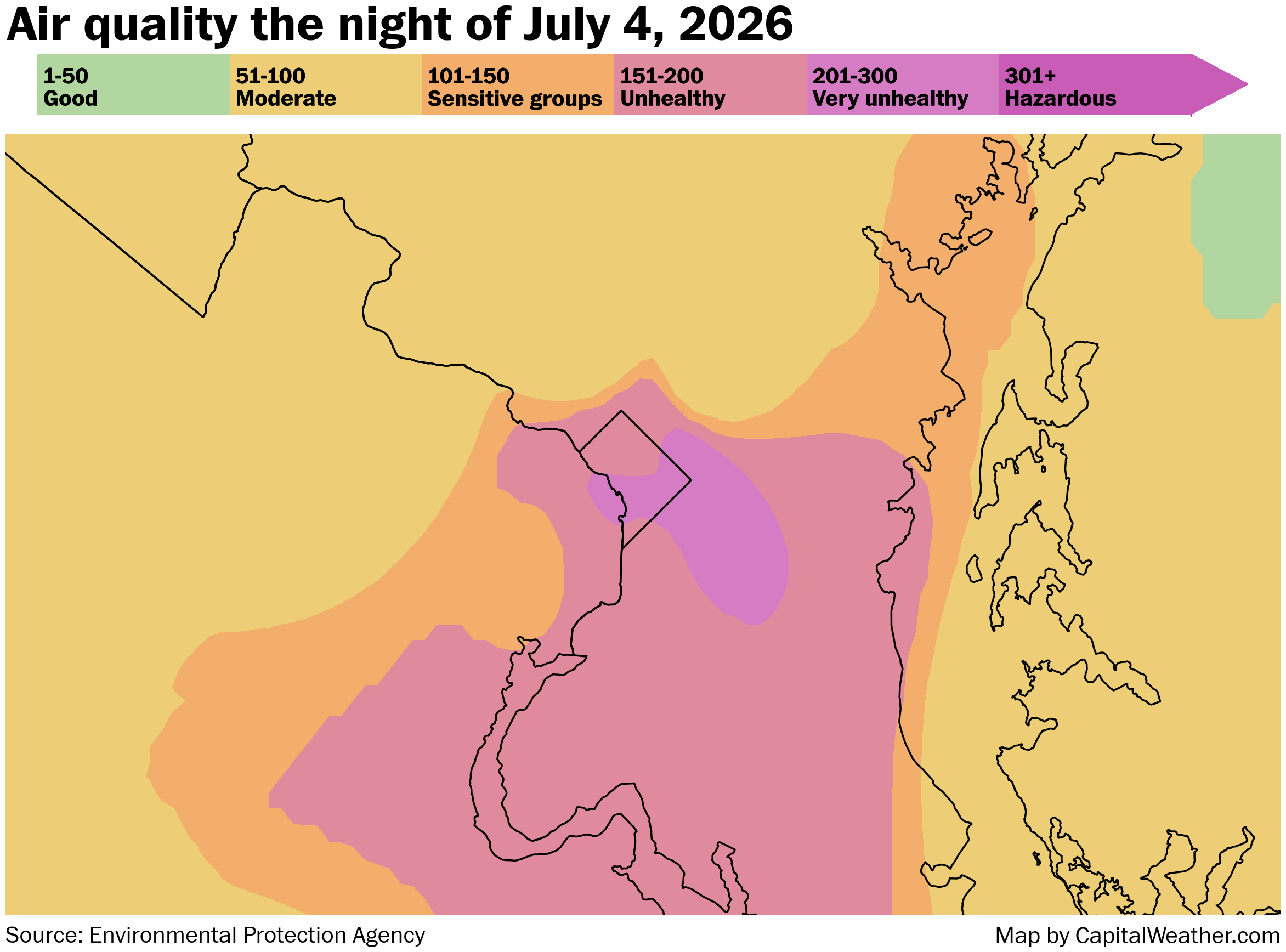
Amid general bouts of chaos on the National Mall, given thunderstorms dotting the area Saturday evening and a questionable evacuation for that activity, the delayed fireworks eventually went off around midnight. It was big, loud, and smokey. As usual, pollutants also reached at least the unhealthy to very unhealthy range in and around DC.
[Weather and health dashboard: including air quality]
A brief period of rain that passed near the typical start time of fireworks subdued the increase in poor air for a bit during the early evening. At 9 p.m., values in and around DC were in the code yellow/moderate range, with air quality index (AQI) values in the 70s.
Not bad compared with many years at that hour. It wouldn't hold.
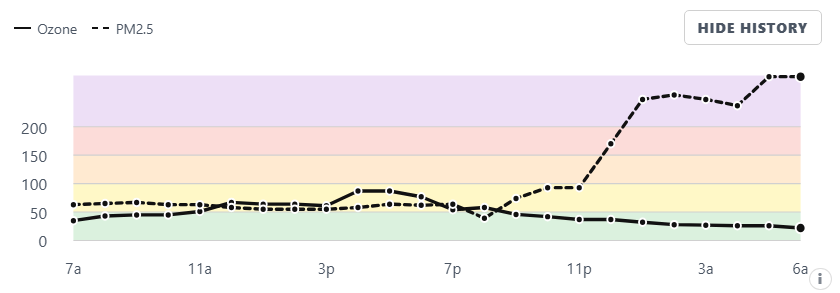
As the late evening progressed, boosted by the massive show on and around the Mall, locations in the city popped into the very unhealthy range. During the show, values at King Greenleaf Recreation Center, just south of the main fireworks event, jumped to AQI 179, or unhealthy. At 1 a.m. and with a humid night plus little wind, both acting to trap smoke, that value was up to 288, or very unhealthy, around sunrise at 6 a.m.
Another station east of Capitol Hill spiked to very unhealthy at midnight, with an AQI of 231, and it was at 278 around sunrise.
These values are all based on PM2.5. PM2.5 are tiny particles, about 1/30th the width of a human hair. They can be inhaled deep into the lungs and cause numerous health issues.
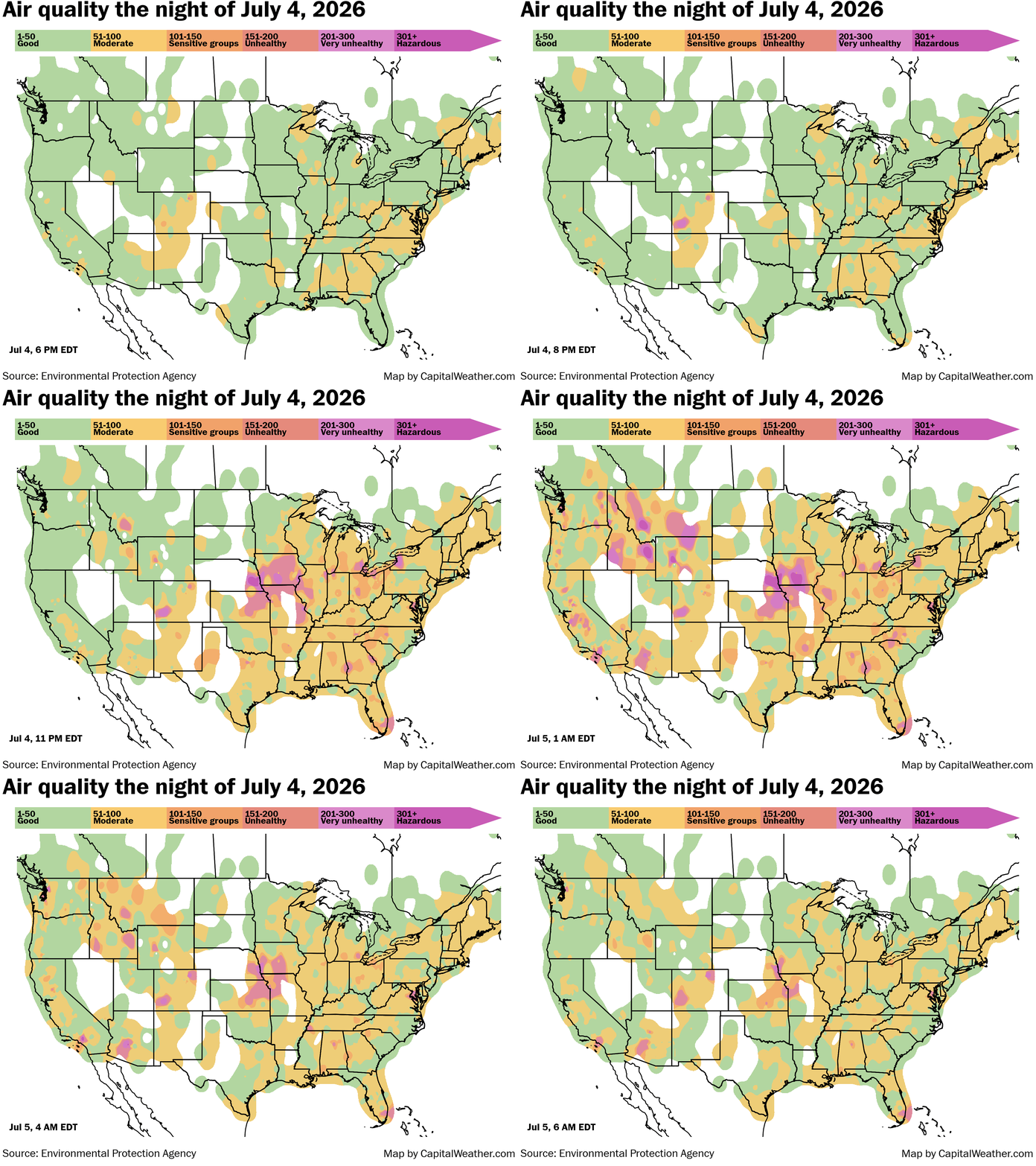
The impact was easy to see in observations at the closed Reagan National Airport.
For 9 p.m., visibility was greater than 10 miles. With the show just starting, the midnight observation showed 8-mile visibility. It dropped to 2.5 miles around 1 a.m., then as far as 0.75 miles in the predawn. While it may not all be the smoke, the smoke in humid conditions makes ground fog development more likely.
Interestingly enough, the early look at peak AQI is quite like the average of recent years that was shared in our post examining the likelihood of a smoked-out situation. It seems both that and the National Park Service predictions more or less verified.
Air quality typically improves relatively quickly after the Fourth.
This year it might be on the slower side given the abundance of particulates and generally light wind expected through the morning. Somewhat stronger gusts Sunday afternoon should better mix the air, but high heat will also increase ozone values, so it'll remain hazy and far from ideal throughout.


