



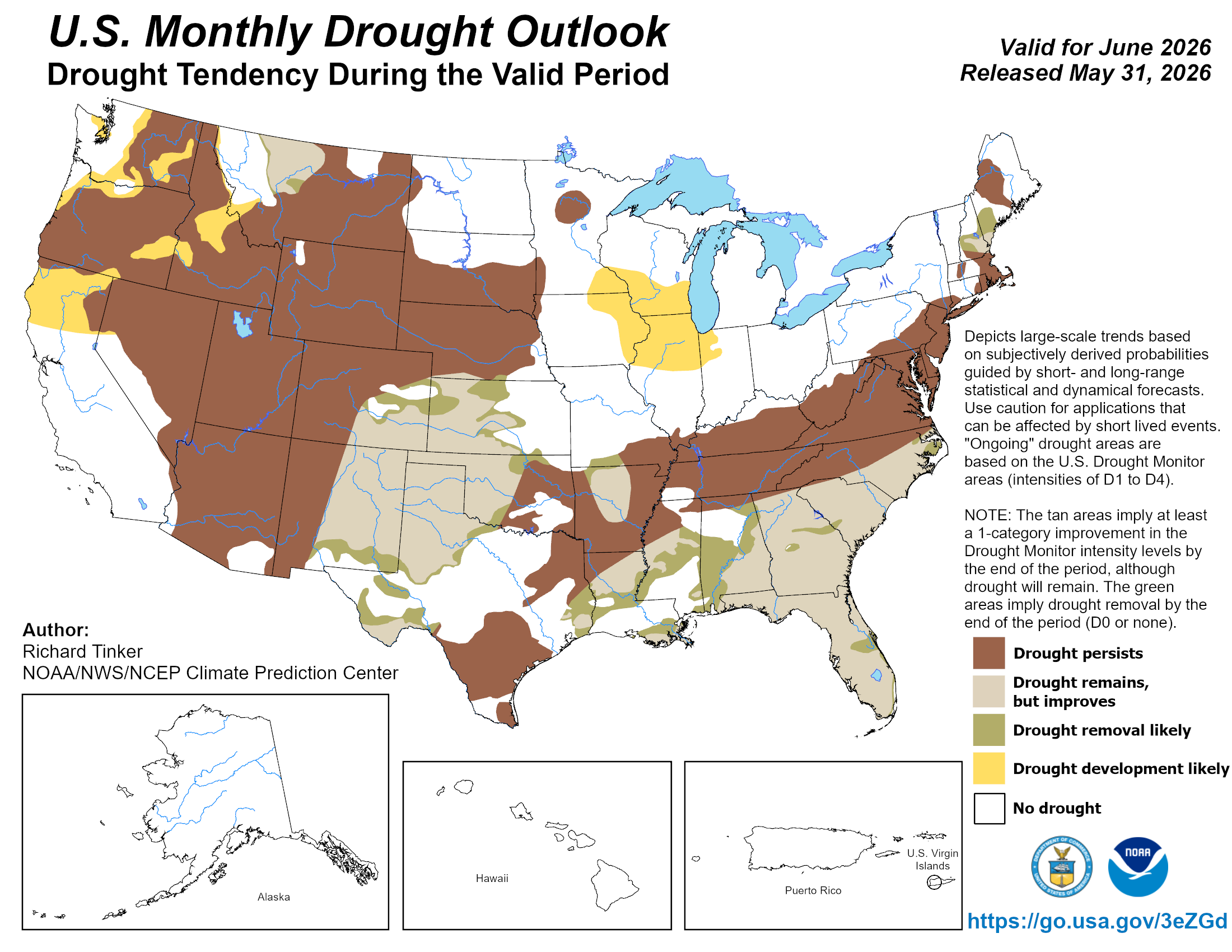
A drought watch is now in effect, following persistent and unusually dry conditions that are expected to continue, the Metropolitan Washington Council of Governments (COG) announced Wednesday. While the COG said the current water supply is adequate, it is encouraging reduced water use in case dry weather persists.
The DC area, and Potomac River watershed more broadly, are dealing with long-term drought conditions. Some easing occurred in mid- to late May, when measurable and beneficial rain fell on 10 straight days.
But – as highlighted in our Climate Room – DC's year-to-date deficit is 4.33 inches, and the 12-month total of 29.55 inches is 12.27 inches below average. Ten of the last of 12 months have been below average, and the story is the same across the area.
“Our region hasn’t seen extremely dry conditions like this in about two decades when local leaders and COG first established a drought response plan to support coordination and communication regionwide,” said Clark Mercer, COG executive director.
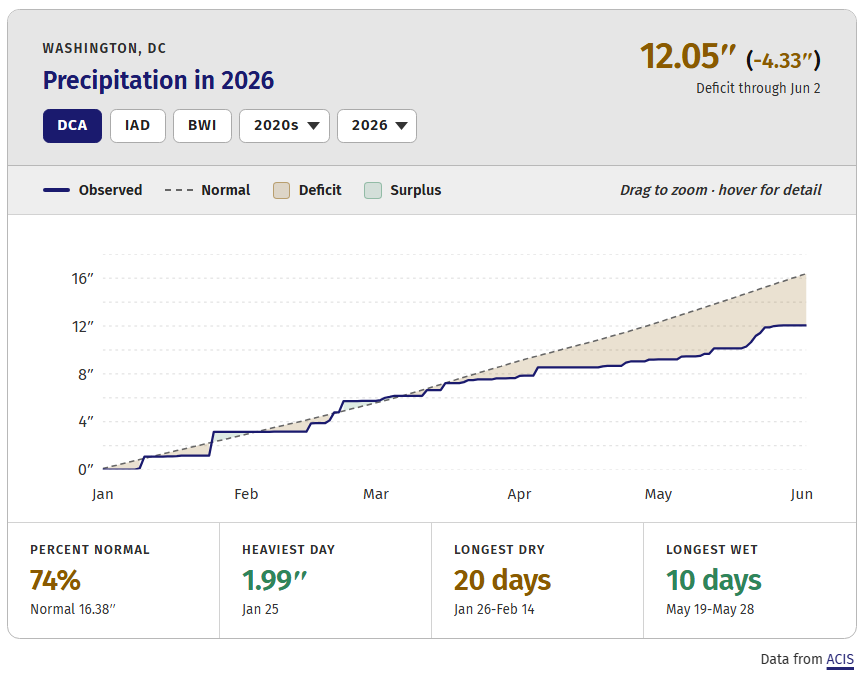
Wednesday's announcement also noted recent rains follow historically low streamflow levels. Amid a stretch of unseasonable warmth that spanned March into April, the Potomac River reached its lowest level observed during the modern record.
A drought watch from COG highlights the risk of dry conditions and encourages smart water use. Ways to limit use include reducing showers, fixing any plumbing leaks, and sweeping sidewalks instead of using a hose.
DC is currently in a Level 2 out of 4 drought, defined as "severe," according to the U.S. Drought Monitor. The drought reached severe levels in mid-April, but either some level of drought or unusual dryness have affected the region since at least 2024.
The last drought watch from COG was in effect from July 2024 to June 2025. A drought warning has never been issued by COG since the system went into place in 2000.
While drought is a frequent aspect of the DC area climate, recent dryness ranks among some of the most pronounced episodes in modern history. While Response to past significant droughts — reservoirs, monitoring, and more — means today's similar conditions do not tend to come with major water availability concerns.
Chances for useful rain in our near future are not too promising.


